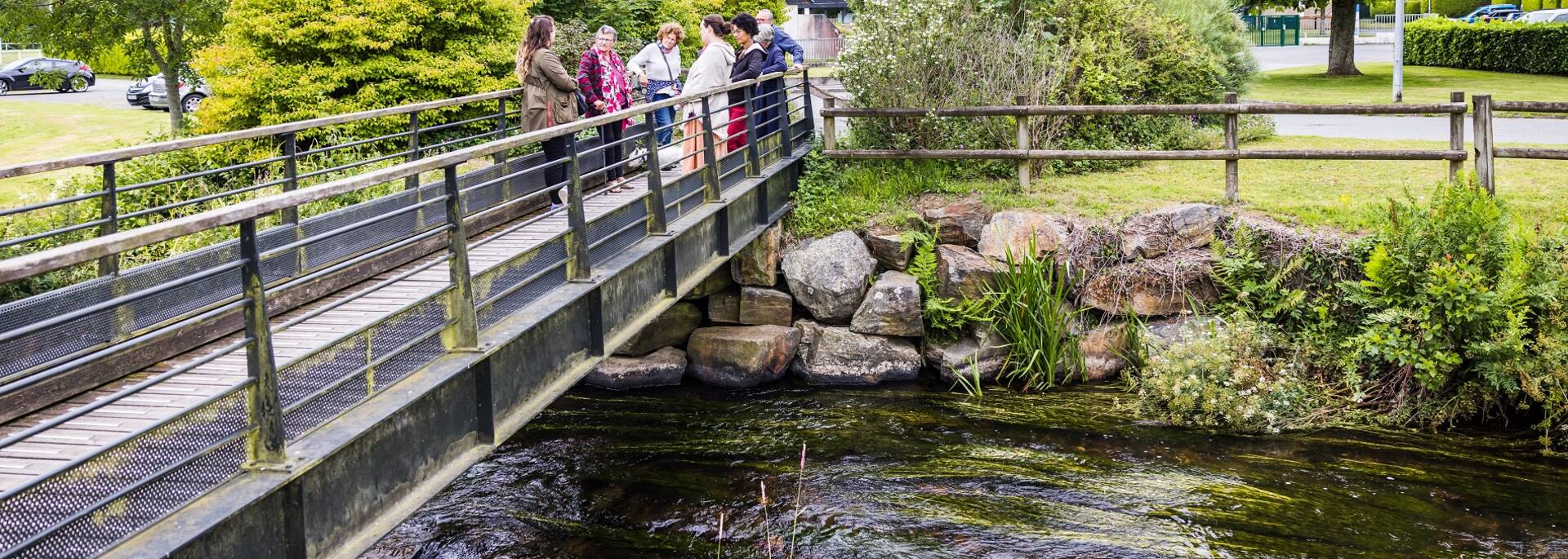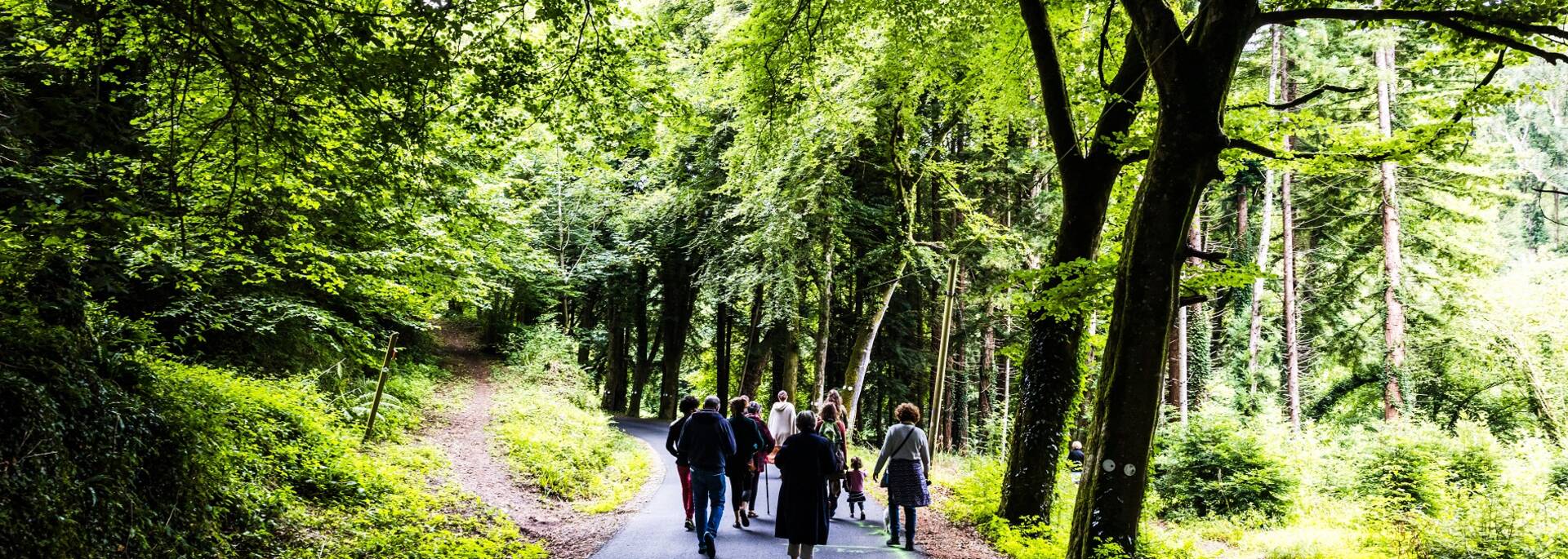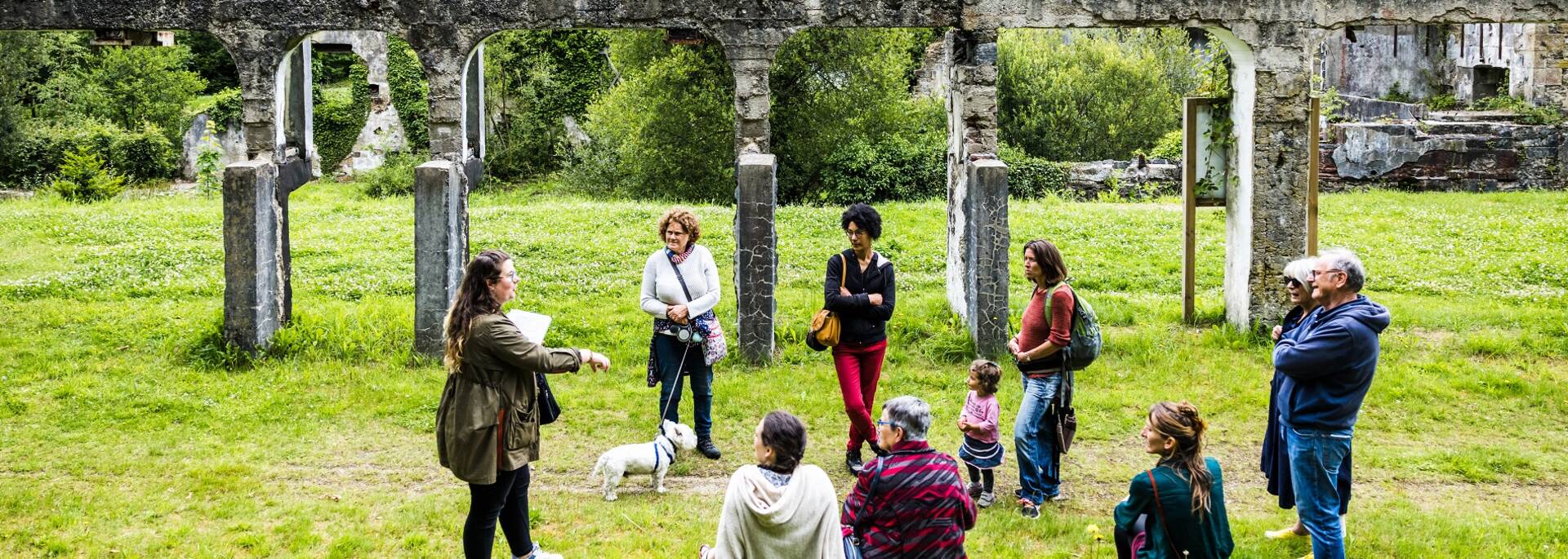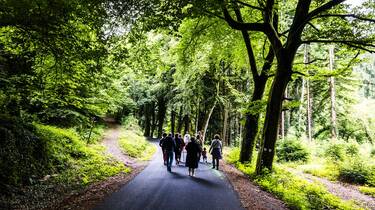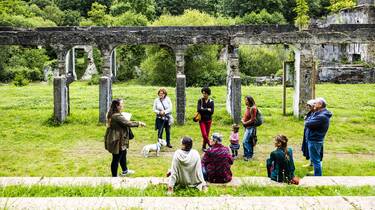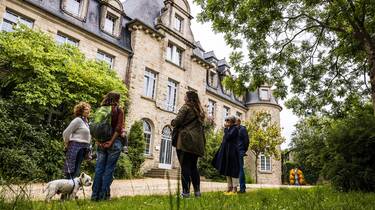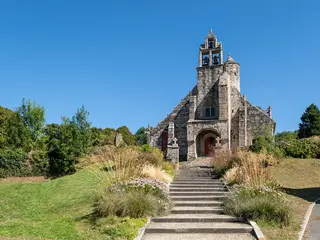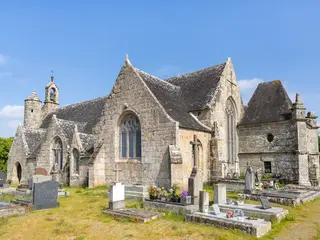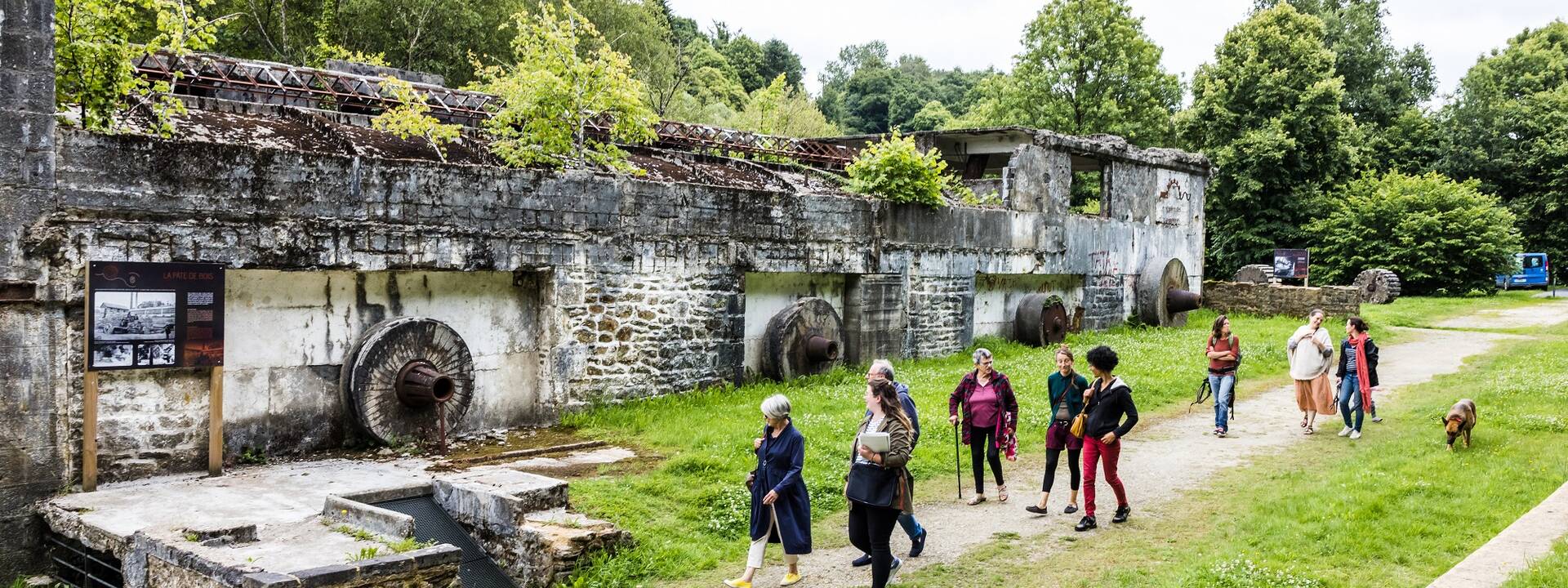
Envela, a guide at Belle-Isle-en-Terre, is waiting for her group to start the visit. “We’re ready to go, follow me. And we’re off for a 3.5 km walk!” Rucksacks and caps firmly in place, six tourists, here to discover the history of the town and its famous Papeterie Vallée paper mill, set off with their guide. “I really enjoy learning about local history,” Alex Benitez from nearby Saint-Jean-Kerdaniel says cheerfully. The visit starts at the red door of the church built from local stone.
The story of paper
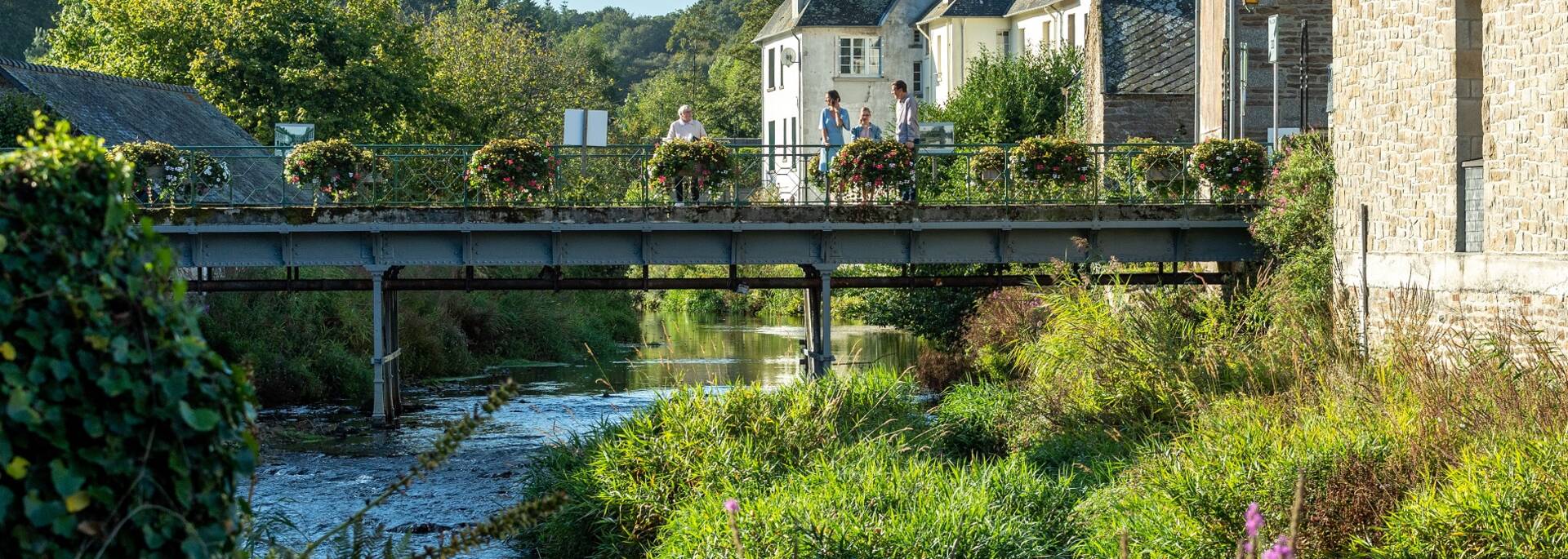
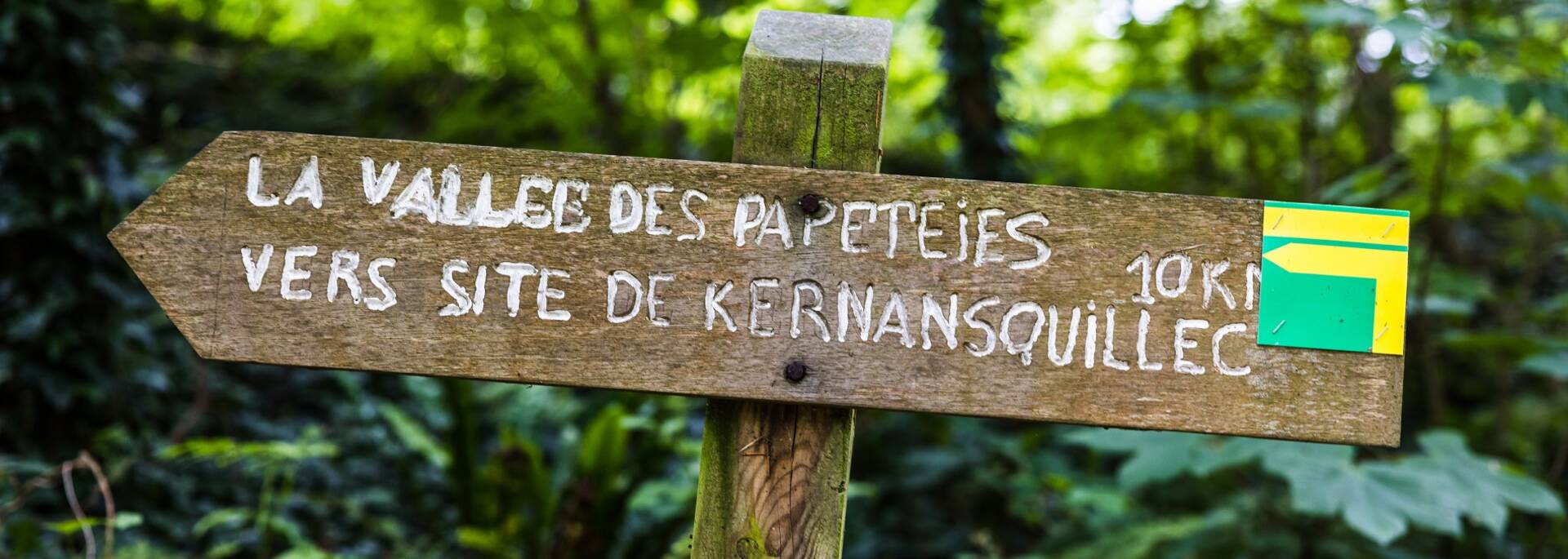
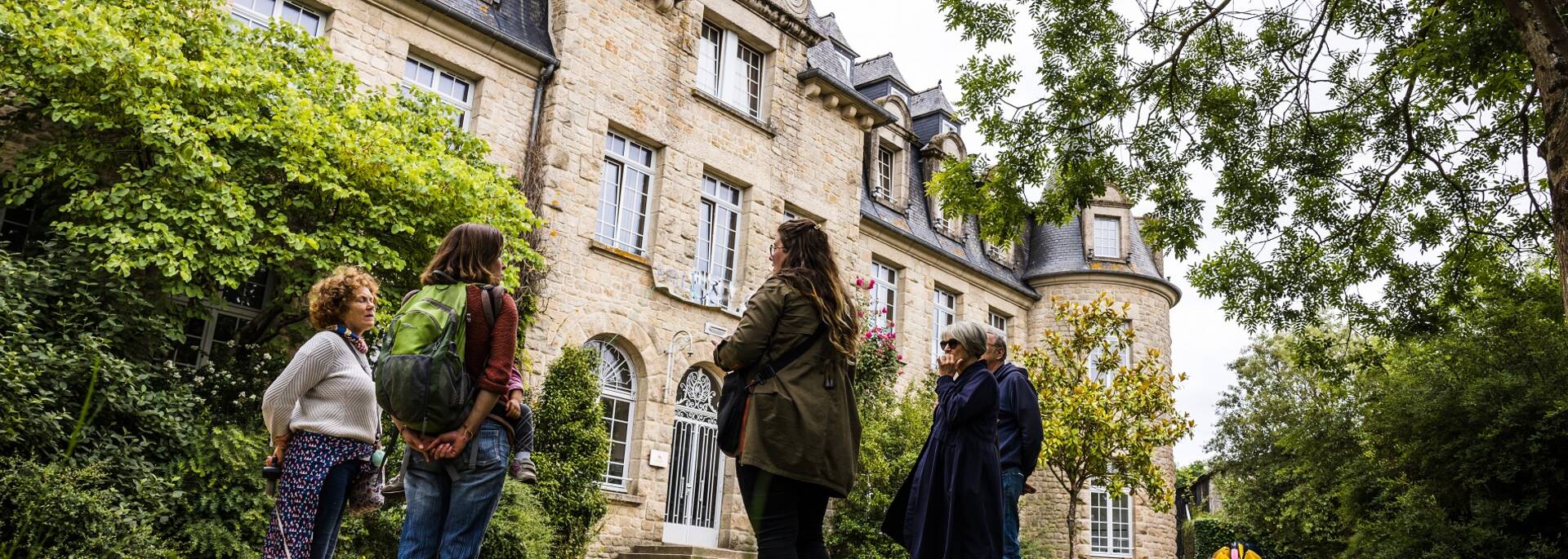
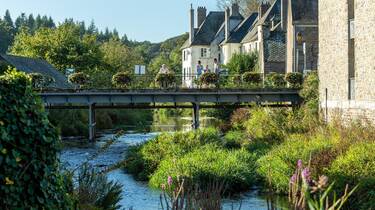
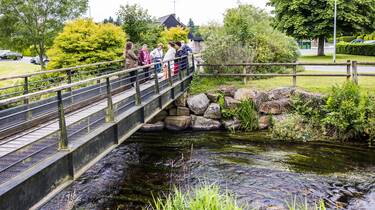
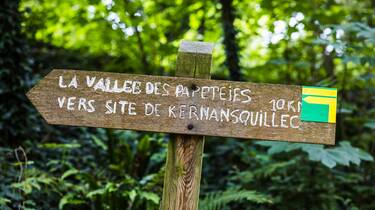
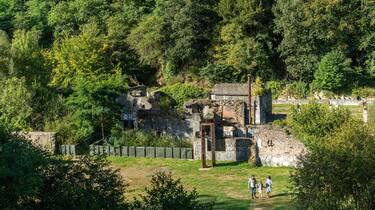
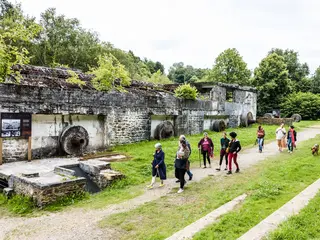
“Follow me, we’re heading for the paper mill,” To reach the site of the former family business, created in 1856, we cross the Léguer - the only river in Brittany to qualify for the label of ‘Rivière Sauvage’ or ‘wild river’ - then we skirt a small wood. Along the way, a former workers’ allotment has been transformed into a glade of sequoia trees. A pause in front of the manager’s house allows us to enjoy the shade under the trees, and to experience the atmosphere of the period when, in 1855, the paper mill was constructed next to the river. It wasn’t until 1923 that the Kernansquillec dam was installed 3 km upstream, to keep up with rising demand.
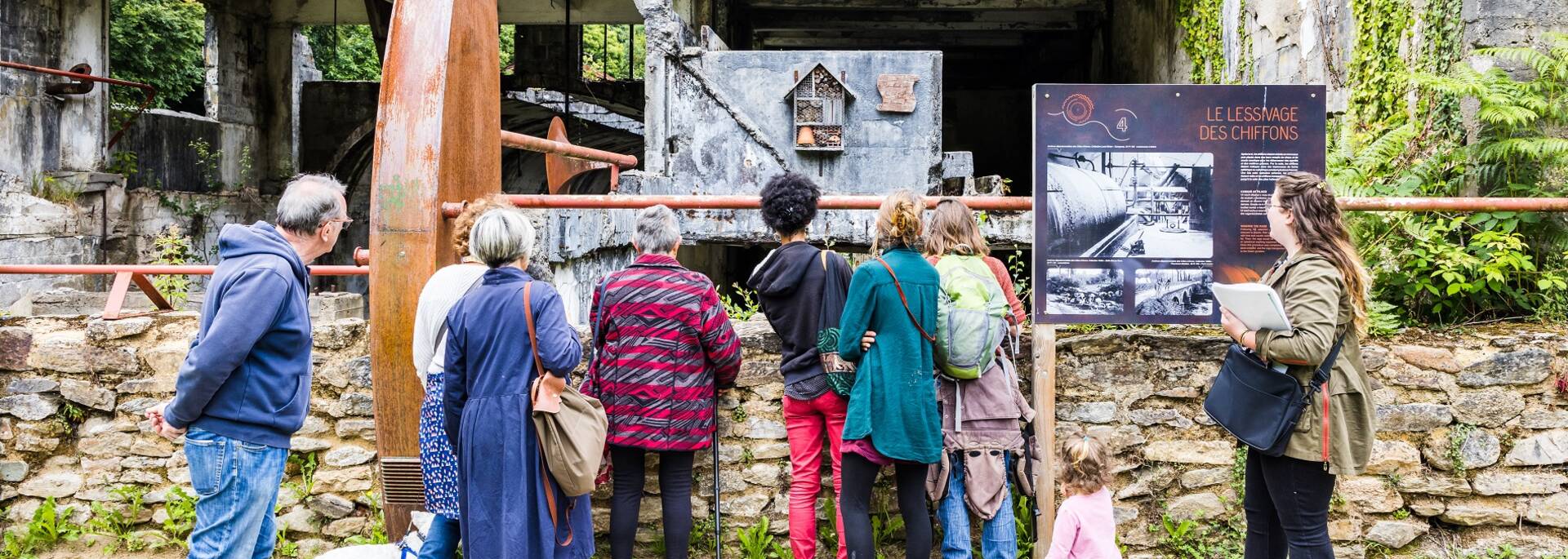
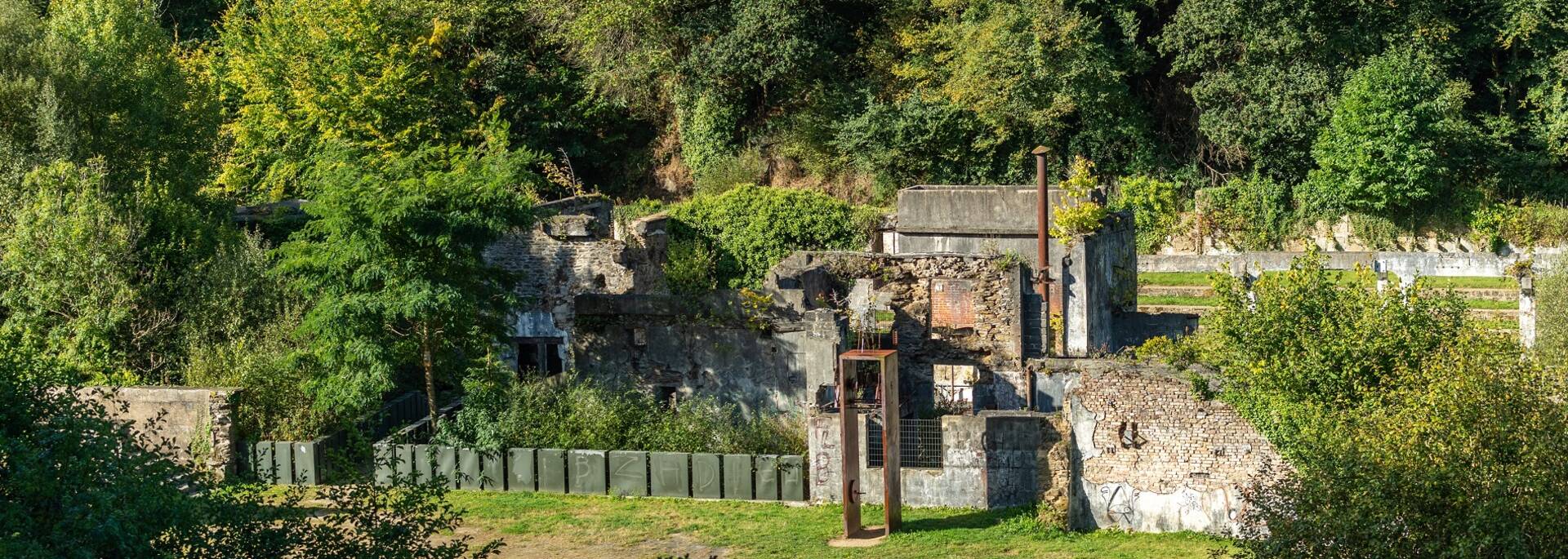
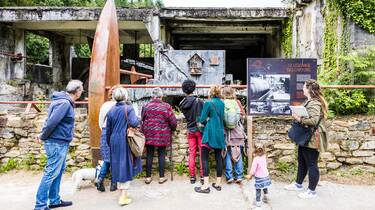
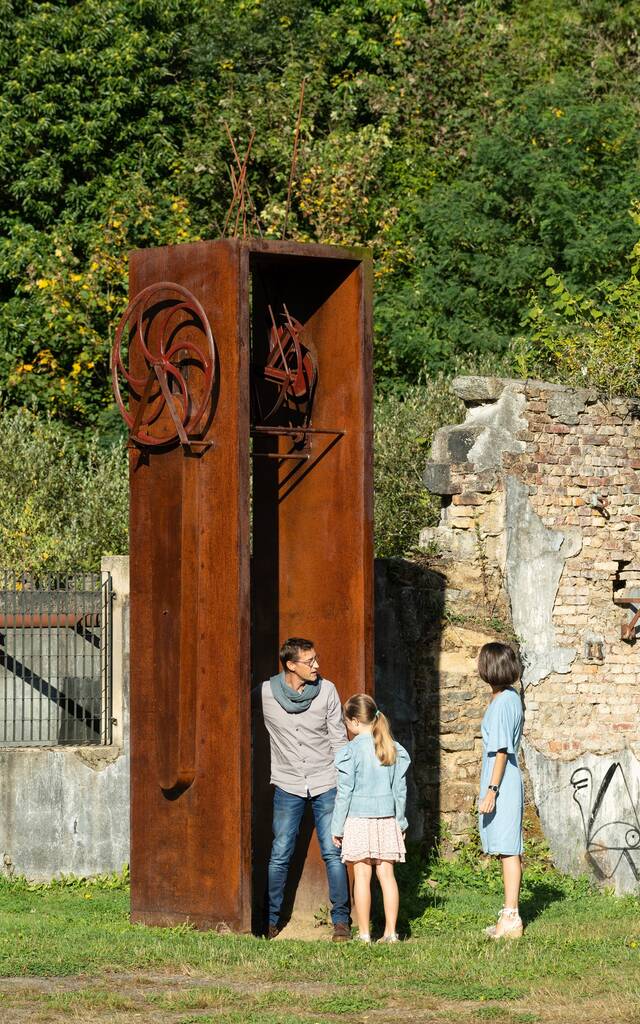
The Papeteries Vallée benefited from their proximity to the river, which provided a plentiful supply of water, enabling them to expand production and become one of the biggest industries in Brittany, employing up to 250 workers. Schoolbooks, blotting paper, food-grade paper and other paper products made up the 4000 tonnes produced by the Vallée paper mill in its heyday, before being overtaken by its competitors. An enormous ironwork spider can be seen on the facade of the foreman’s house. In the grass, strange serrated objects look as if they have fallen from the sky to tell the story of the place. “These are drums from Hollander beaters, used to press and shred the rags used to make paper,” explains the knowledgeable and enthusiastic guide. The walk continues through the remains of the paper mill. “The Vallée company once provided the livelihood for up to 1000 people in and around Belle-Isle-en-Terre. It dates back to the beginning of the industrial revolution, and was considered to be particularly modern for its time.” Period photographs bear witness to the harshness of working-class life and the evolution of society.
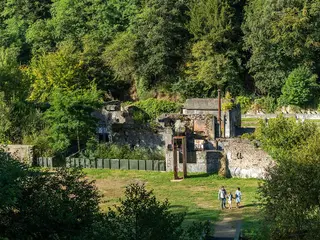
Climbing a steep, narrow path, we leave the Papeterie Vallée behind us, but there are reminders of its existence everywhere. A little further on, the former workers’ cottages have a panoramic view, showing the site from a different perspective.
In the footsteps of Lady Mond, from peasant girl to great lady
The stairs lead to a fountain, which is where the charming Lady Mond comes to join us on our visit. A daydreaming child turned worldly Parisienne, she met and frequented many famous people, becoming a habituée of fashionable haunts where she was the talk of the town. She succeeded in charming a rich Englishman who made her his heir, then she married the immensely wealthy Mr. Mond, and persuaded him to come to Brittany, where the couple acquired many properties and châteaux.
Maï, now Lady Mond, remained deeply attached to her origins. The chatelaine of the Château de Coat an Noz proved to be a generous benefactress, making many donations to the commune of Belle-Isle-en-Terre. Numerous prominent figures were invited to the château, where Marie-Louise Le Manac’h, known as Maï, the only daughter in a family of ten children, presided over lavish soirées.
A fabulous and improbable destiny
And now we come to the stud farm commissioned by Lady Mond, along with a number of other buildings. We can almost see her, in her fine clothes, striding through the streets. We discover her château, which she decided needed to be moved 10 metres during the course of its construction. A rich history, immense wealth, and a woman who proved to be a generous benefactress to her birthplace. She was, moreover, not indifferent to the Breton cause, and spoke proudly and fluently the language of her childhood, passed on by her parents. Lady Mond particularly lent her support to many local initiatives, helped local people and financed the construction of public buildings such as the town hall, the post office, the stud farm, the gendarmerie and the village hall in Belle-Isle-en-Terre. Local visitor Ronan has never done the tour before. “It’s really interesting, especially because a neighbour of my parents used to work at the paper mill, and one of my uncles lives in one of the workers’ cottages. A succession of images heightens our emotions. Willy is equally enthusiastic: “I love the nature aspect of the walk, especially the paper mill. You can visit a place a thousand times without really knowing it.”
Telling the story of a place brings it back to life
Steeped in history, the site and its ruins evoke much curiosity, and immerse visitors in the heart of an industrial adventure that shaped the daily lives of many local families. A visit here allows visitors to get a sense of the daily lives of the thousands of workers who once occupied the site and to imagine the hustle and bustle within the industrial buildings.
(© Text by Publihebdos - Léonore Royer)